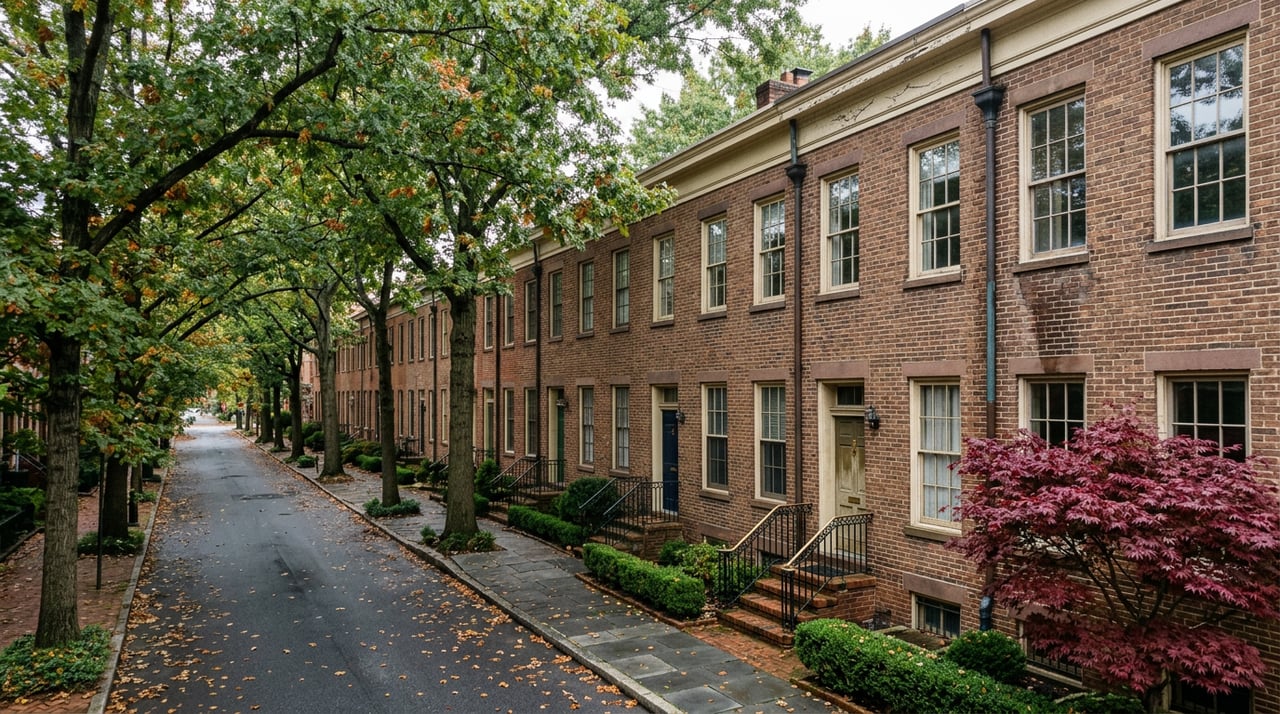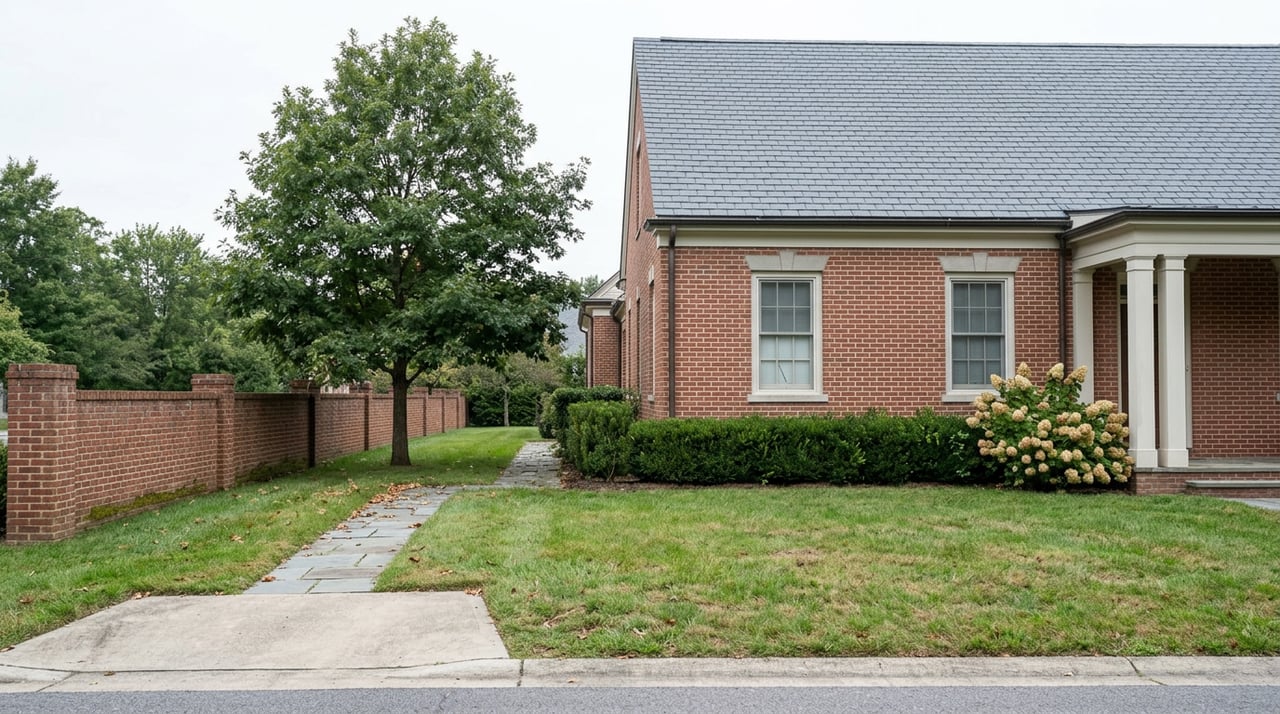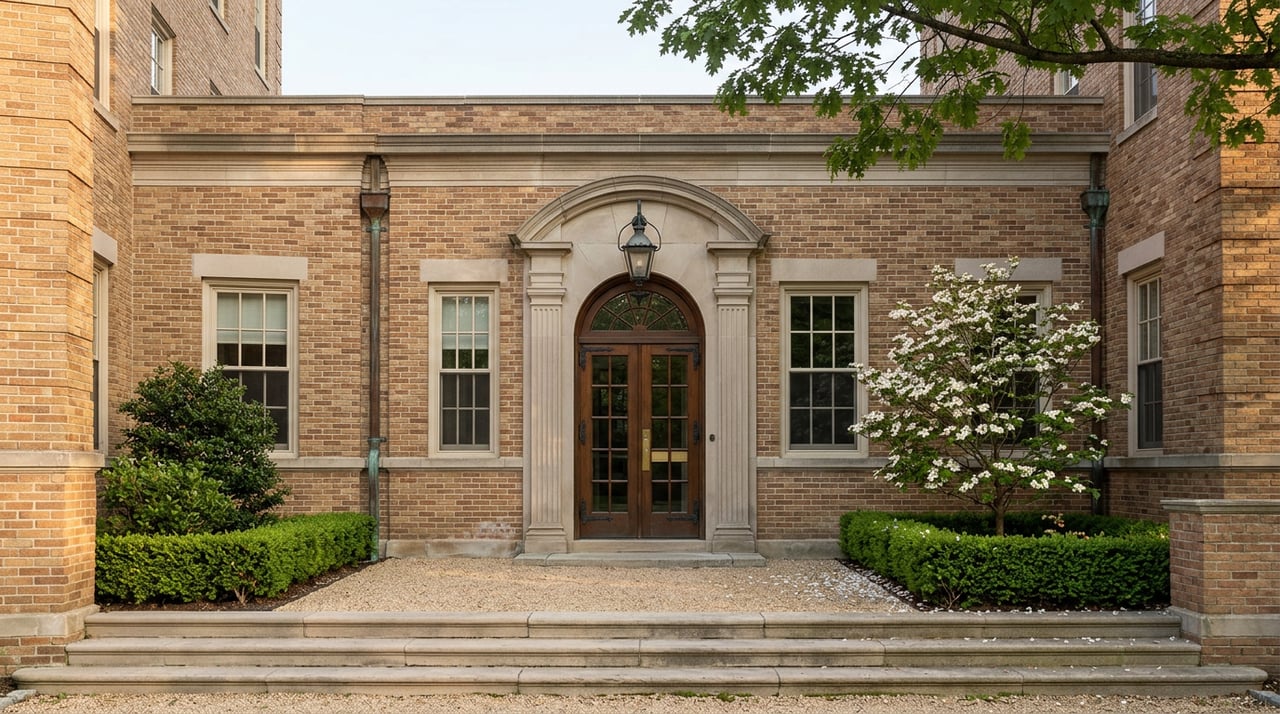
A buyer touring Tilden Gardens on a Saturday afternoon in Cleveland Park will hit a number that stops the conversation cold: a co-op fee close to $2,000 a month, on top of a purchase price that already looks steep for the square footage. Walk two blocks south to a newer condo building and the fee drops to a few hundred dollars. The instinct is to treat that gap as proof the co-op is the worse deal.
It isn't proof of anything yet. It's an unbundling problem, and Cleveland Park's four landmark co-ops (The Broadmoor, Tilden Gardens, the Kennedy-Warren, and the Cleveland Park Cooperative at 3618 Connecticut Avenue) are exactly where that problem shows up, because these buildings predate the condo structure altogether and were never designed to separate their costs the way a modern association does.
What's actually inside that number
A recent Tilden Gardens listing on the top floor of the co-op's main building at 3000 Tilden Street shows a monthly co-op fee of $1,944.79. The same listing shows total annual property taxes of $3,075, or about $256 a month, and that tax bill is not a separate line item the buyer pays on top of the fee. It's already inside it. So is heat, water, building insurance, reserve fund contributions, management, pest control, snow removal, and trash. A condo owner down the street pays a much smaller association fee, then writes separate checks for property taxes and homeowners insurance, and often pays their own utilities on top of that.
Run the same math on a smaller unit in a different building and the fee shrinks with it. A one-bedroom co-op at 3900 Connecticut Avenue, one of the buildings in the Tilden Gardens complex, carries a monthly fee of $535.44, a fraction of the figure above, because unit size and the underlying building's reserve funding drive the number more than any single line item does. The lesson isn't that co-op fees are low or high. It's that the fee is not comparable to a condo fee until you strip out what a condo owner pays separately.
The buildings behind the numbers
Cleveland Park's co-op stock isn't generic. Each building has a distinct history that shapes what a buyer is actually walking into.
The Broadmoor, at 3601 Connecticut Avenue NW, was completed in 1928 and 1929 as a luxury apartment hotel, designed by architect Joseph Abel with an underground garage that was ahead of its time. It converted to cooperative ownership in 1948, after wartime rent controls pushed owners toward the co-op model, and today holds 194 units across five acres. The building does not allow pets.
Tilden Gardens is actually six Tudor Revival buildings spread across five acres, built in the late 1920s, and its roster of past residents includes Harry Truman. Its MLS listings specify "Cash, Conventional" as the only acceptable financing, a detail that matters more than it might look like on the page.
The Kennedy-Warren, at 3133 Connecticut Avenue NW, opened in 1930 and 1931 as an Art Deco showpiece overlooking the National Zoo and Klingle Valley Park, with a south wing added between 2002 and 2004 after a five-year permitting process. The Cleveland Park Cooperative at 3618 Connecticut Avenue NW is the smallest and oldest of the group, built in 1923, with a fee structure that bundles custodial services, exterior maintenance, a master insurance policy, reserve funds, sewer, trash, and water.
None of these are interchangeable, and a buyer who treats "Cleveland Park co-op" as one category will misjudge both the price and the process.
Financing is the real gate, not the fee
Here's the claim that changes how a buyer should shop these buildings: the co-op fee is not the obstacle. The financing structure is.
Tilden Gardens' listings limiting acceptable financing to cash or conventional loans reflects a pattern that runs through most prewar DC co-ops. FHA loans are rarely available for co-op purchases because the building itself has to be FHA-approved, and very few co-op buildings meet that bar. That's not a Cleveland Park quirk. It's a structural feature of how co-ops are underwritten everywhere, and it means a buyer who assumed they'd finance with a low-down-payment government-backed loan needs a different plan before they write an offer.
On top of that, the District's own Cooperative Housing Coalition notes that financing a DC co-op purchase requires the building's board to have signed a recognition agreement with the buyer's lender. That agreement spells out the priority of claims between the co-op, the lender, and the individual owner if payments fall behind. If a buyer's preferred bank has never signed one with a specific building, that lender isn't available for this purchase, no matter how good their rate is. A real estate agent or settlement company familiar with co-op transactions can tell a buyer up front which lenders already have agreements in place with which Cleveland Park buildings, which saves weeks of back and forth mid-contract.
That financing constraint lands differently today than it would have a few years ago. As of August 26, 2026, the average 30-year fixed mortgage rate in Washington, DC stood at 6.81 percent, close to the national average of 6.77 percent. In a rate environment where every basis point matters, discovering mid-contract that your chosen lender isn't approved for the building you're buying into is a costlier mistake than it would have been when rates were near zero and buyers had more room to absorb delay.
One thing that can help offset the larger down payments many co-ops expect: DC's Home Purchase Assistance Program explicitly extends to single-family homes, condos, and co-ops alike, offering interest-free financing amortized over 40 years plus closing cost assistance for qualifying buyers. It's worth asking about early, before a buyer assumes a co-op purchase locks them out of down payment help that a condo buyer would get.
The board is a second closing, not a formality
A DC condo association generally has no right to approve or reject a buyer. A co-op board does, and that single difference restructures the whole transaction. The board reviews the buyer's finances, requests documentation, and in many buildings conducts an interview before granting approval to transfer shares. Each building sets its own rules on top of that baseline: the Broadmoor doesn't allow pets, Tilden Gardens both restricts pets and runs parking through a waitlist, and building-specific house rules govern everything from subletting to renovation approval at each address.
A buyer who assumes the co-op purchase timeline mirrors a condo resale, appraisal, inspection, close, is missing a step that happens in parallel with all of that: board review. Building that into the offer timeline, and confirming which lenders already have a recognition agreement on file, does more to protect a closing date than negotiating the purchase price by a few thousand dollars.
What this means if you're comparing a Cleveland Park co-op to a condo
| Building | Built / Converted | Monthly fee typically bundles | Financing note | Building-specific restriction |
|---|---|---|---|---|
| The Broadmoor, 3601 Connecticut Ave NW | 1928–29, co-op since 1948 | Taxes, heat, water, insurance, reserves, staff | Buyer's lender must have a signed recognition agreement with the board | No pets |
| Tilden Gardens, 3000 Tilden St NW / 3900 Connecticut Ave NW | Late 1920s | Taxes, heat, water, insurance, reserves, management | MLS listings show cash or conventional financing only | No pets, waitlist parking |
| The Kennedy-Warren, 3133 Connecticut Ave NW | 1930–31, south wing 2002–04 | Taxes, utilities, reserves, concierge staff | Financing subject to board-approved lender list | Subletting rules set by board |
| Cleveland Park Cooperative, 3618 Connecticut Ave NW | 1923 | Custodial, exterior maintenance, insurance, reserves, sewer, trash, water | Financing subject to board approval | Building-specific rules apply |
The number on the listing page is a starting point, not a verdict. A buyer comparing a $1,945 co-op fee to a $650 condo fee two blocks away needs to unbundle both before deciding which one actually costs more per month, and needs to confirm financing eligibility with the specific building before falling in love with a unit.
Frequently asked questions
Are Cleveland Park co-ops actually cheaper than condos once you unbundle the fees? It depends on the building and unit. Because co-op fees often include property taxes, heat, water, and insurance that a condo owner pays separately, a direct fee-to-fee comparison overstates the co-op's cost. Run the full monthly obligation, taxes and utilities included, before comparing.
Can I get an FHA loan for a Cleveland Park co-op? Rarely. FHA financing on any co-op requires the building itself to carry FHA approval, and few prewar co-op buildings, including the ones in Cleveland Park, meet that standard. Several local listings specify cash or conventional financing only. Confirm with the building's management before assuming a loan program will work.
Does DC's Home Purchase Assistance Program work for co-op purchases? Yes. The program extends to single-family homes, condos, and co-ops for qualifying buyers, offering an interest-free loan amortized over 40 years and closing cost assistance, which can help offset the larger down payments some co-op boards expect.
Do all Cleveland Park co-ops restrict pets? No blanket rule applies across every building. The Broadmoor and Tilden Gardens have historically not allowed pets, but policies are set individually by each cooperative's board and should be confirmed directly before making an offer.
If you're weighing a Cleveland Park co-op against a condo and want help lining up financing that's already approved for the specific building you're considering, David Cox and the Cox & Cox Group can walk you through the board package, the lender list, and the real monthly math before you write an offer. Contact us. Let's solve your home needs.